
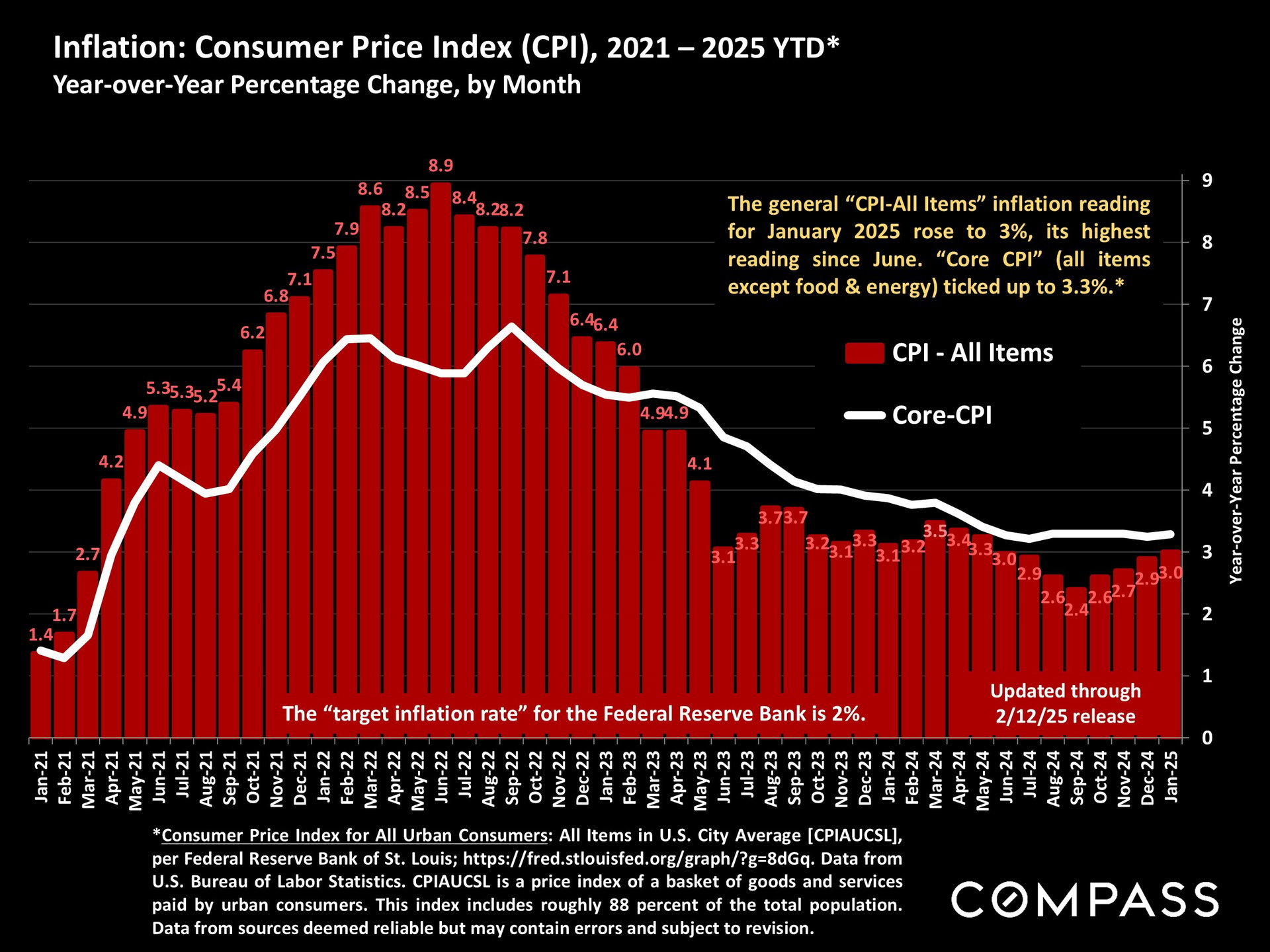
Inflation (CPI - All Items, red columns) ticked up again in January to its highest reading since June, no doubt confirming in Jerome Powell's mind that, per his comments 2 days ago, with inflation still elevated and the jobs market strong, there is no hurry to cut the Fed's benchmark rate. Many believe the beginning of threatened tariff wars will only make inflation rise, though the president disagrees and has called for the Fed to cut interest rates. (Powell's tenure runs through May 2026.)
This analysis and data were compiled by our friend Patrick Carlisle at Compass.
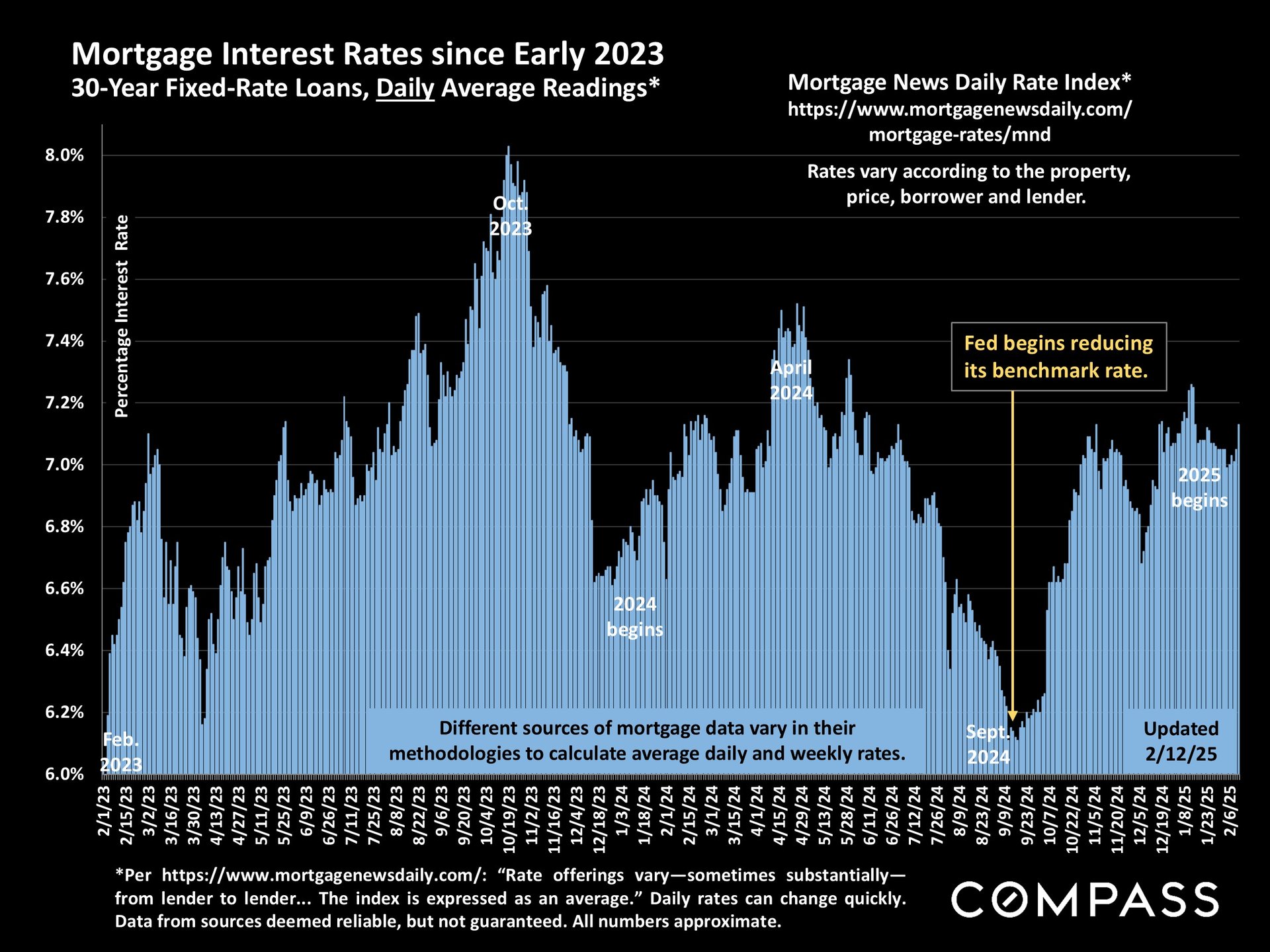
Interest rates have so far responded to the latest inflation report by rising as shown in this daily average chart updated yesterday, the day of the inflation report release.
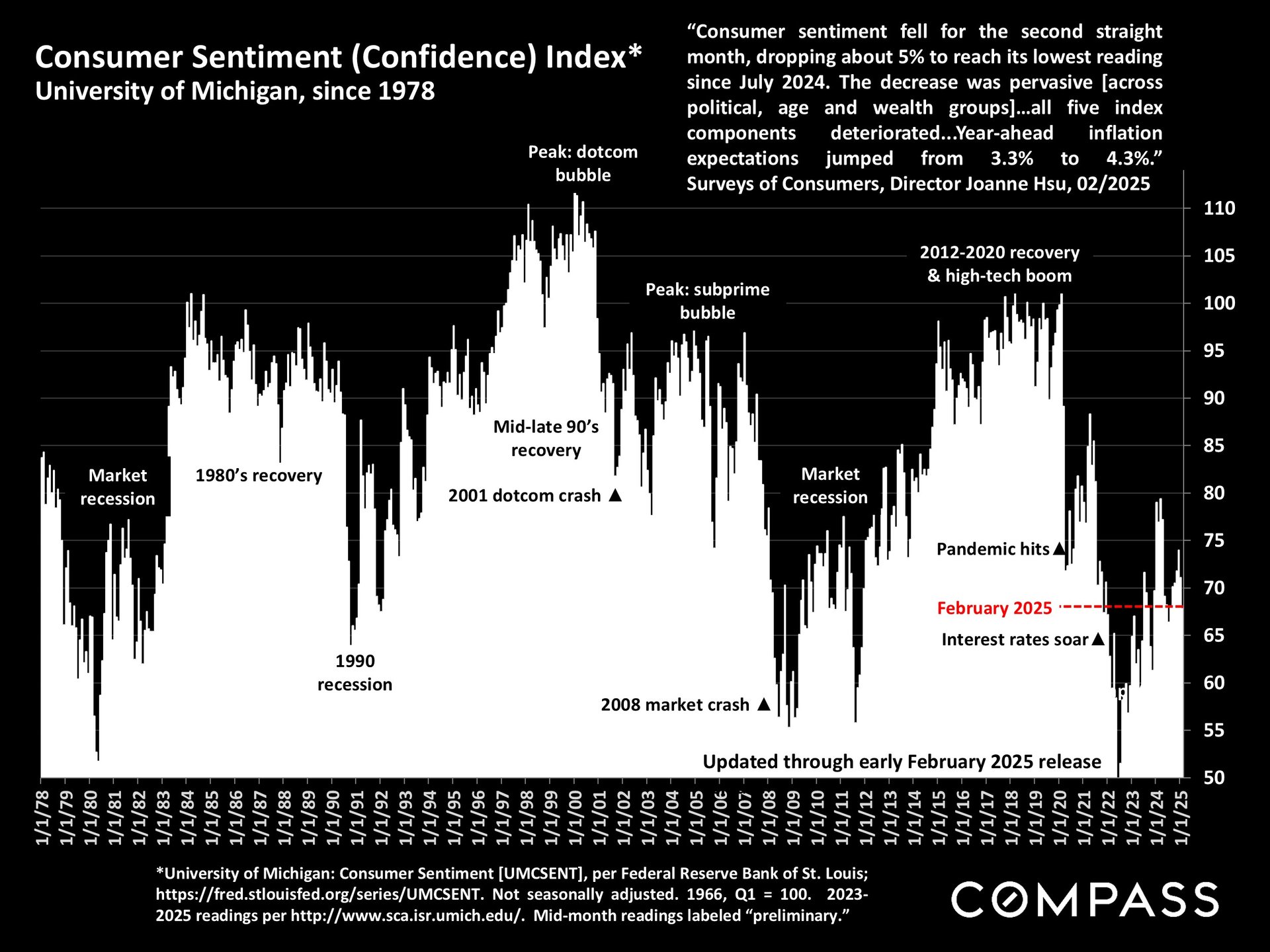
The enormous volatility and uncertainty in national and international political developments appears to be making many people increasingly unsure about the future.
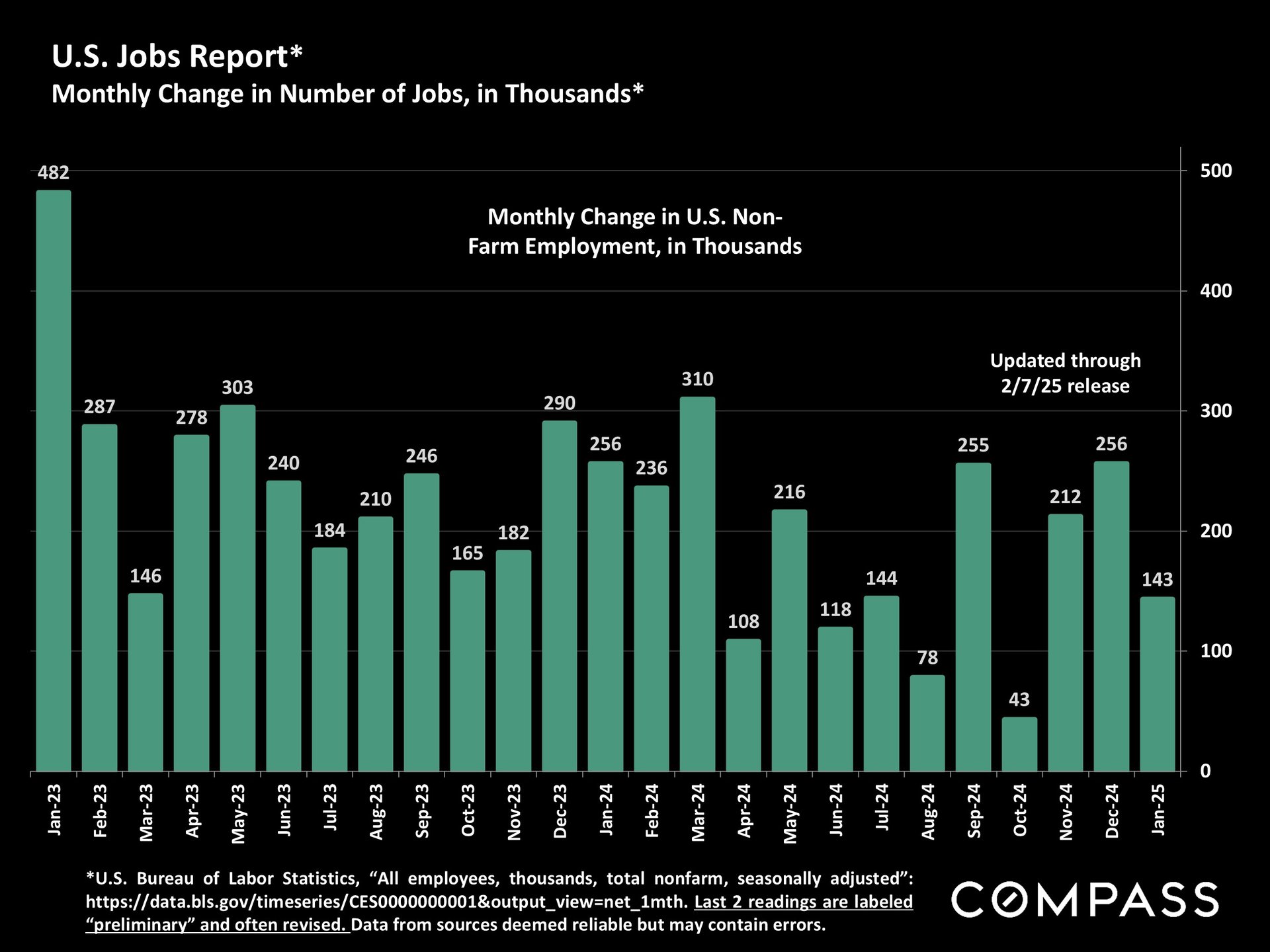
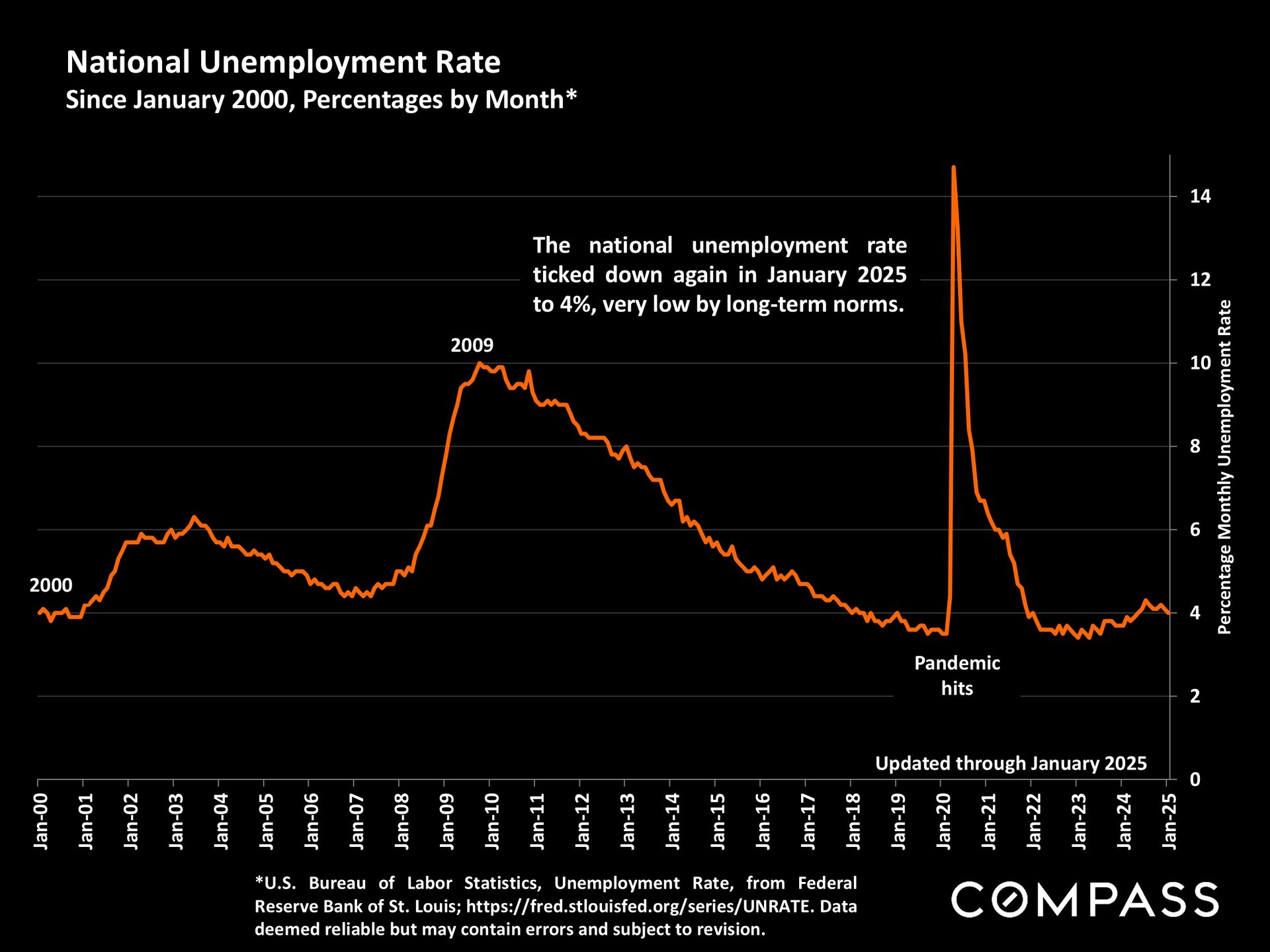
The jobs market saw an increase in January that was somewhat below general expectations - though these numbers are often subsequently revised - while the unemployment rate ticked down to 4%. In recent years, investors and economists can't seem to decide whether a strong jobs market is good or bad news as they attempt to assess its influence either on the economy or on the Fed. It's hard to make concrete predictions regarding the effects of the current administration's recent attempts to massively downsize the federal workforce and reduce federal funding across a broad spectrum of endeavors (which impacts hundreds of thousands of other jobs). Difficult to see these actions helping employment or consumer confidence, at least in the short term, but clearly the administration believes the economic and political benefits outweigh the negatives. And, of course, lawsuits are being filed in their dozens.
(After the Deepseek-triggered plunge) stock markets have rebounded and remain largely unfazed by recent developments, maintaining their enormous increases since the beginning of 2024 - a huge positive for household wealth, especially more affluent households.

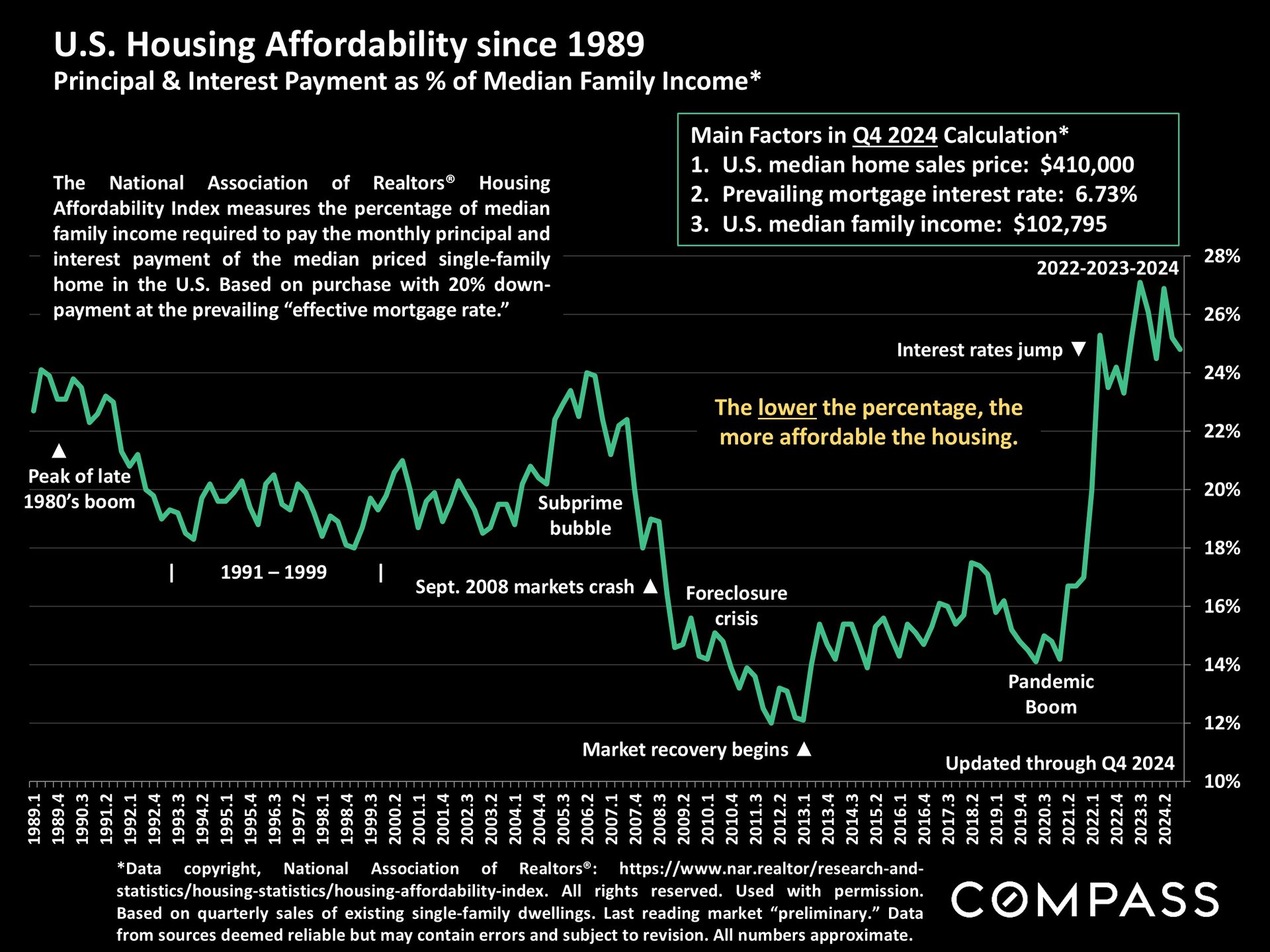
NAR's National Housing Affordability Index, (Principal & Interest Payment as % of Median Family Income): Generally speaking, housing has been more unaffordable during the last 3 years than at any time going back to 1989 (and undoubtedly much earlier). Though not much worse in Q4 2024 than at the peaks of the late 1980's and subprime booms. Both those previous peaks were followed by significant recessions, however that is not typically being predicted by economists now.
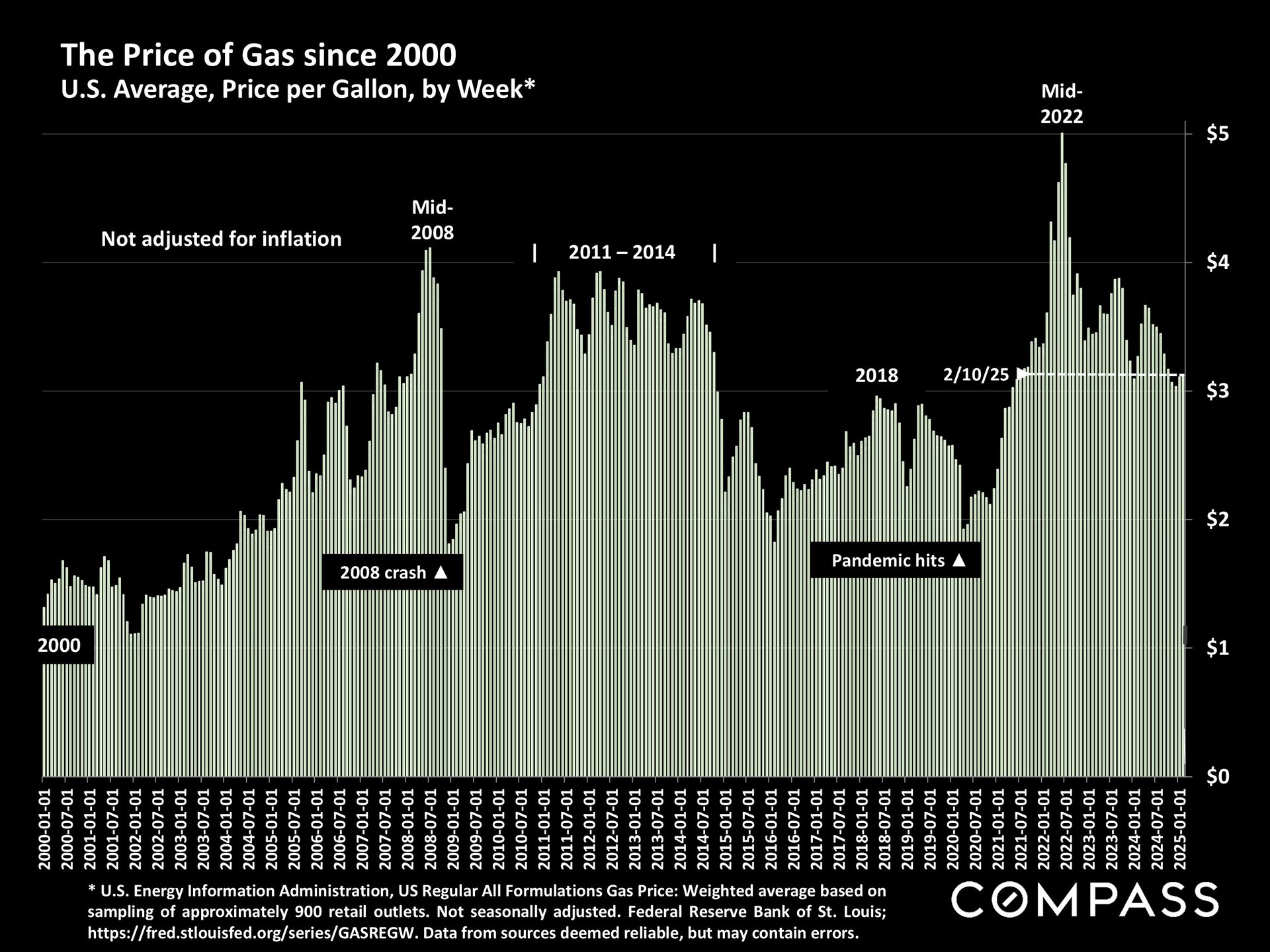
And now for something completely different (as Monty Python used to say), the price of gas, unadjusted for inflation, since 2000: